AI/ML for plasma physics
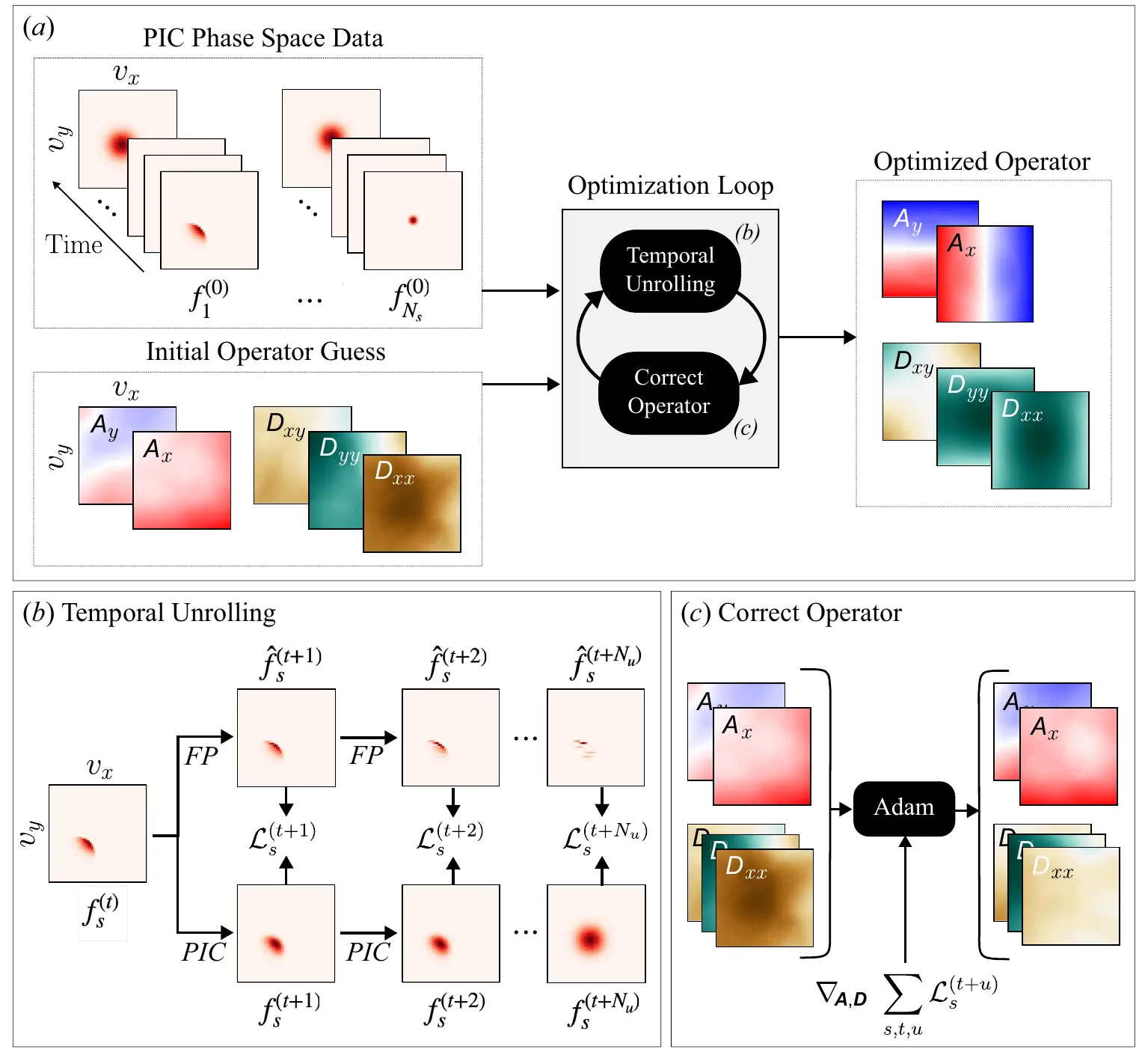
Learning collision operators with differentiable simulators
J. Plasma Phys. 92, E76 (2026)

Our group develops and uses state-of-the-art kinetic plasma simulation software, increasingly combined with AI/ML, to make fundamental discoveries in plasma-based acceleration and light sources, plasma astrophysics, laser–plasma interactions, and the nonlinear optics of plasmas.
Our AI/ML research aims to accelerate simulation- and data-driven discovery, design better simulation algorithms, and develop new theoretical models of plasma phenomena.
The group is co-led by Professors W. B. Mori and E. Paulo Alves.
AI/ML for plasma physics
J. Plasma Phys. 92, E76 (2026)
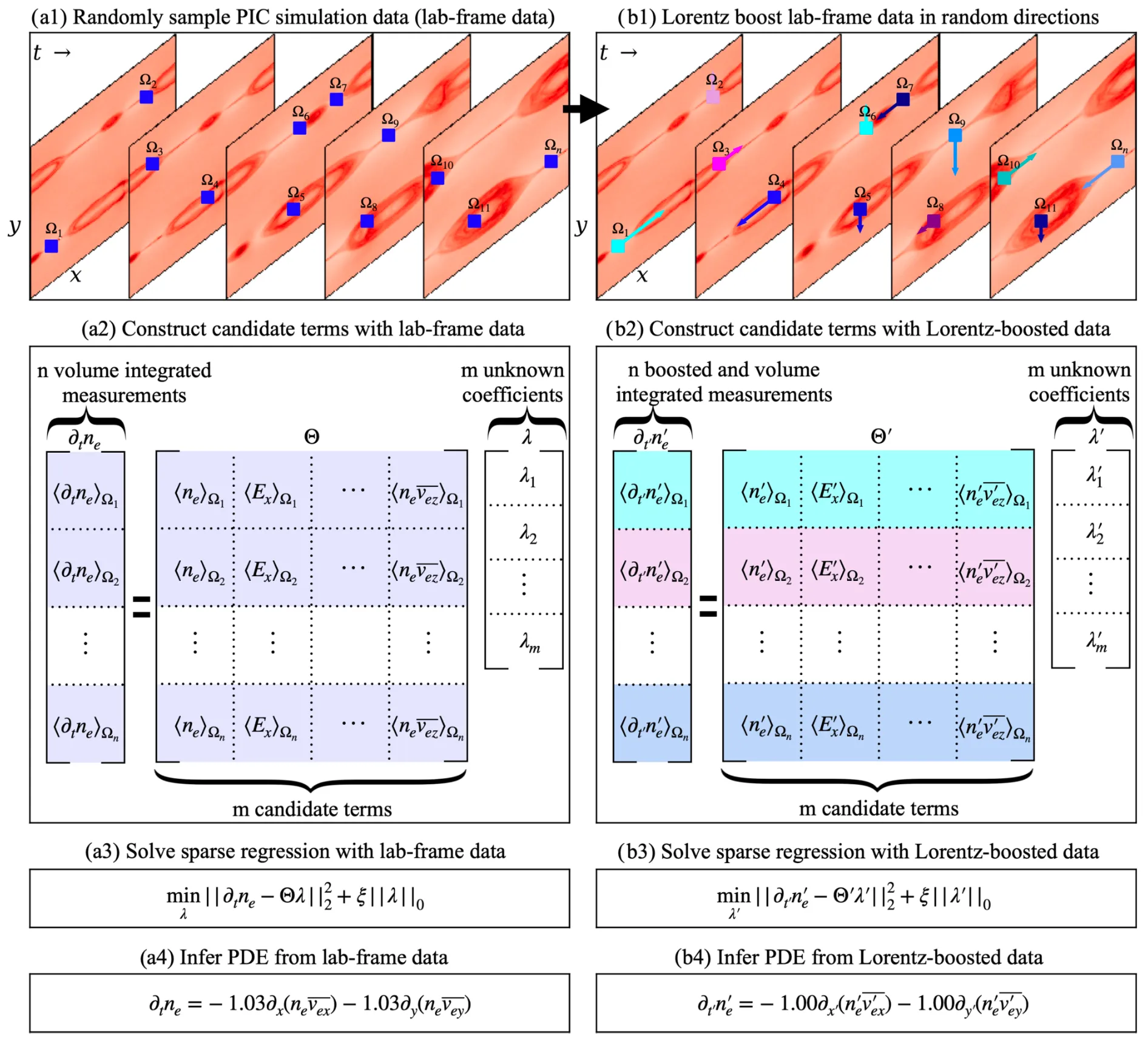
AI/ML for plasma physics
Phys. Rev. Research 8, 013200 (2026)
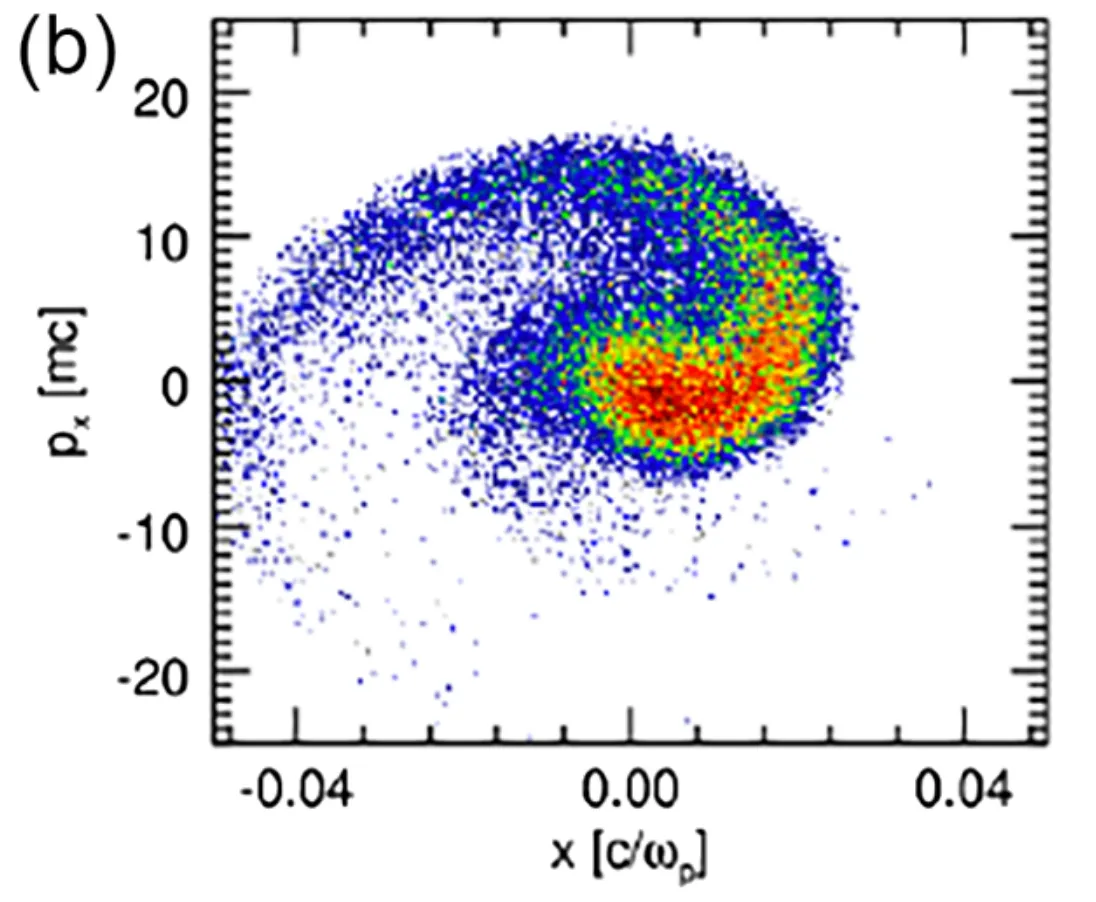
Plasma-based acceleration
Phys. Rev. Lett. 135, 195002 (2025)
We develop and share production and educational codes used by plasma physicists around the world.
OSIRIS
Fully relativistic, massively parallel electromagnetic PIC code, now open source with GPU support.
QuickPIC
Fully parallel, relativistic 3D quasi-static PIC code for plasma wakefield acceleration.
QPAD
Quasi-3D quasi-static PIC code combining the quasi-static approximation with azimuthal decomposition.
OSHUN
Parallel relativistic 2D3P Vlasov–Fokker–Planck code.
UPIC & skeleton codes
Trusted, bare-bones parallel PIC components and mini-apps for building new codes.
Educational codes
Jupyter notebooks and small PIC codes for teaching plasma physics.
R. Tang, W. An, H. Wang, et al. · Plasma Physics and Controlled Fusion (2026)
V. Patel, S. Chase, F. S. Tsung, et al. · Accepted in Physical Review E (2026)
J. L. Shaw, M. V. Ambat, K. R. McMillen, et al. · Nature Photonics 20, 1070-1074 (2026)
Y. Tian, Y. Wang, T. N. Dalichaouch, et al. · Journal of Plasma Physics 92, E103 (2026)
P. Geng, Y. Wu, Z. Fan, et al. · Optica 13, 1271 (2026)