90 million processor hours on the IBM Blue Gene/Q Machine at Argonne National Laboratory have been awarded to Frank
Tsung (PI), Warren Mori (Co-PI), Ben Winjum, and Viktor Decyk as a 2015 Incite Award for “Petascale Simulations of
Laser Plasma Interactions Relevant to IFE”.
The Research Summary for the Award: Inertial (laser-initiated) fusion energy (IFE) holds incredible promise as a
source of clean and sustainable energy for powering devices. However, significant obstacles to obtaining and
harnessing IFE in a controllable manner remain, including the fact that self-sustained ignition has not yet
been achieved in IFE experiments. This inability is attributed in large part to excessive laser-plasma
instabilities (LPIs) encountered by the laser beams.
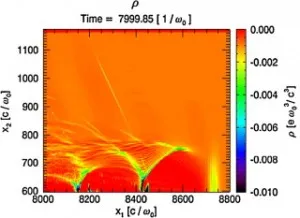
LPIs such as two-plasmon decay and stimulated Raman scattering can absorb, deflect, or reflect laser light,
disrupting the fusion drive, and can also generate energetic electrons that threaten to preheat the target.
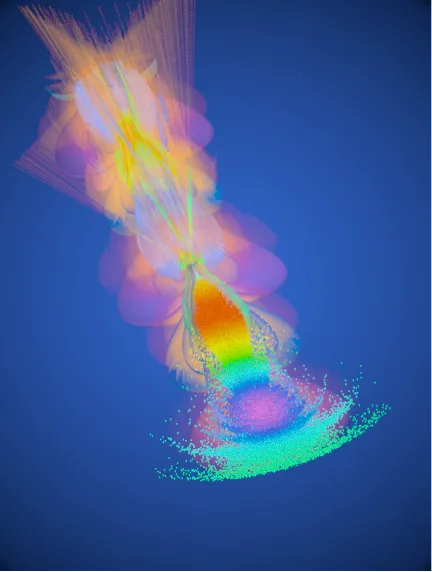
Nevertheless, IFE schemes like shock ignition (where a high-intensity laser is introduced toward the end of
the compression pulse) could potentially take advantage of LPIs to generate energetic particles to create a
useful shock that drives fusion. Therefore, developing an understanding of LPIs will be crucial to the success
of any IFE scheme.
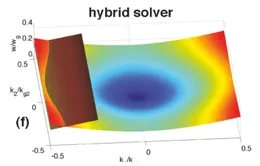
The physics involved in LPI processes is complex and highly nonlinear, involving both wave- wave and
wave-particle interactions and necessitating the use of fully nonlinear kinetic computer models, such as
fully explicit particle-in-cell (PIC) simulations that are computationally intensive and thus limit how
many spatial and temporal scales can be modeled.
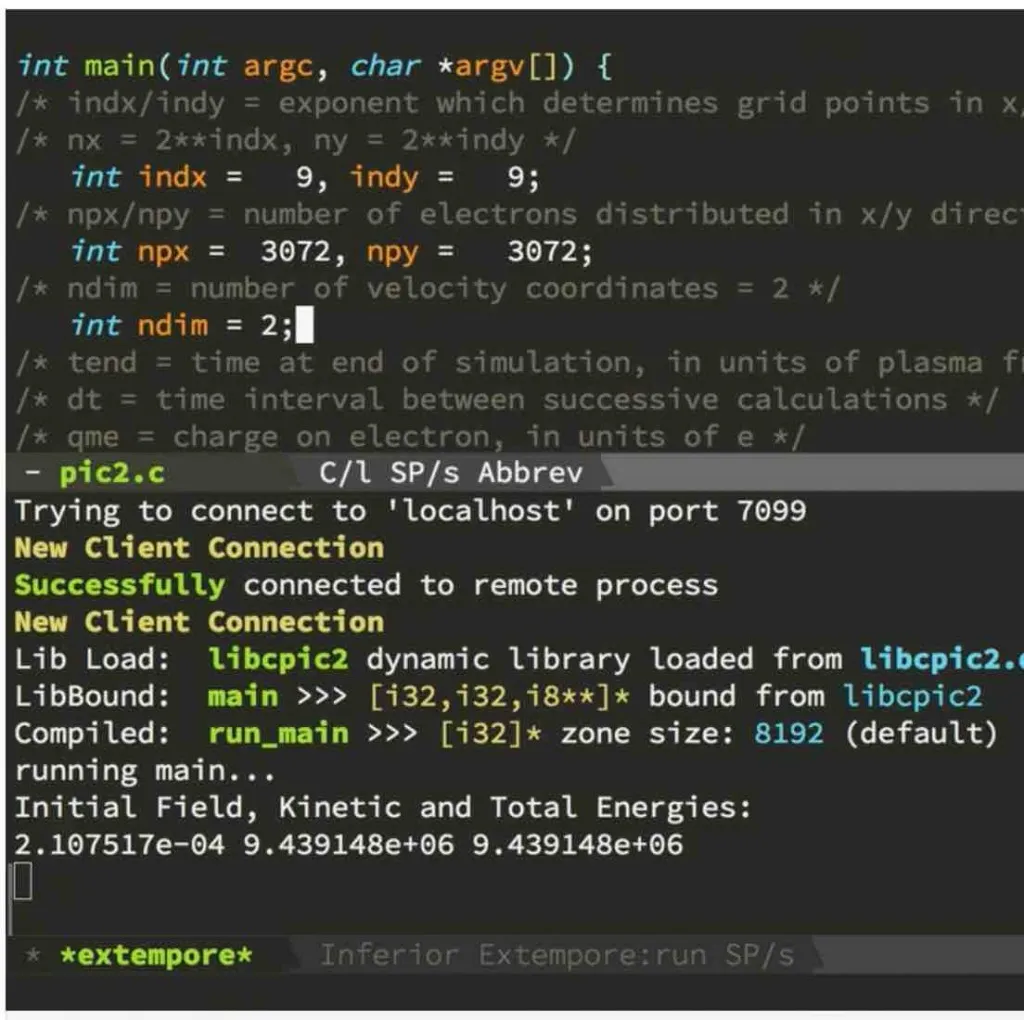
By using highly optimized PIC codes, however, researchers will focus on using fully kinetic simulations
to study the key basic high energy density science directly relevant to IFE. The ultimate goal is to develop
a hierarchy of kinetic, fluid, and other reduced-description approaches that can model the full space and
time scales, and close the gap between particle- based simulations and current experiments.